
|

Home | Who we are | Our Mission | The Committee | Staff & Services | Projects | News | Publications | Site Map | Futures workshop 2012
Click on the link for further information
Recovery and Protection of Moore River Catchments Threatened Natural Assets Funding State NRM $199,800
Productive saltbush pastures to combat wind erosion in the Moore River Catchment Funding C4OC $96,500
Increased Adoption of Sustainable Brushwood Production Funding C4OC $224,000.00
Creating Productive Saltbush Pastures on Saline Land NLP Funding $100,592.00
Control of rising groundwater and salinity in the Koojan - Gillingarra Region Funding NAP $195,000.00
Revegetation of Natural Drainage Lines and Protection of Remnant Vegetation in the East Moore catchment. NAP $411,000.00
|
State NRM
A15053 – Planting food for endangered Carnaby's Black-Cockatoo in the Gillingarra IBA $52,000.00
Project Activities:
With support from Birdlife Australia, Gillingarra LCDC, New Norcia Benedictine Community, NACC, Yued community and the Shire of Victoria Plains, this project will increase the area of suitable feed habitat for Carnaby’s Black-Cockatoo in this IBA on private land (acquired through an EOI process) and on public land around the Gillingarra townsite, and also on the New Norcia monastery farm just outside the IBA. The planting areas will be located close to the breeding sites to enable efficient foraging during the breeding season, and will include Marri and Wandoo seedlings to increase the number of suitable nesting trees in the long term.
- Revegetating 12ha of land within the target area with 12,000 feed species plants (Hakeas, Grevilleas, Banksis, Wandoo & Marri);
- Fence and protect the revegetated areas with 1km of fencing;
- Engaging local Yued group work crew to carry out 2ha revegetation at New Norcia site;
- Running a community planting day in Gillingarra to plant 1,000 seedlings around the community hall;
- Providing land managers with guidance on how and where to plant them on their property;
- Holding an information event in Gillingarra to raise awareness of the plight of Carnaby’s Black-Cockatoo and show
- residents how to identify feed species, unveil new Gillingarra Carnaby's signage;
- Encouraging participation in the Carnaby’s Black-Cockatoo counts coordinated by Birdlife Australia in Gillingarra and New Norcia;
- Designing 4 signs raising awareness of Carnaby’s and local ecology conservation (2 for Gillingarra and 2 for New Norcia)
Carnaby's Victoria Plains information Flyer |
NACC
1512-05-11 - “Identifying cost effective ways to incorporate lime in the Moora-Miling farming district”
This project will engage Precision Soil Tech to soil sample a paddock of each of the 5 farms involved, then the famer spread the lime at normal application rates. Then the farmer will use their preferred incorporation machine eg scarifier, old combine, one way disc plough or a rotary hoe to incorporate a designated strip across the paddock
MMPIG Report |
NACC
1615-16C-01 - Guilderton Pyp Grass Management Plan
Sections of the primary dune system located at Guilderton are currently being degraded by infestations of this species and the biodiversity of surrounding vegetation is being undermined as a result of the spread of this invasive weed. A Management Plan is required to guide control of Pyp Grass within the town site of Guilderton. Baseline assessment is required to determine location and extent of Pyp Grass to aid comprehensive mapping of the weed in Guilderton.
The identification of priority areas for Pyp Grass management and an associated revegetation strategy will form part of the Guilderton Pyp Grass Management Plan. Community liaison and involvement into Pyp Grass control is essential for long term management in Guilderton
Guilderton Pyp Grass Management Plan
|
State NRM
10023 – Improving habitat and connectivity in the farming landscape for birds in the Moore River catchment $30,300.00
MCC is pleased to announce success in their application to the State NRM Program 2011-12 Community Grants. Funding has been made available for “Improving Habitat and Connectivity in the Farming Landscape for Birds in the Moore River Catchment”.
Recent projects in the Moore River Catchment have contributed to protecting habitat and improving habitat condition through fencing of remnant vegetation and revegetation, as part of a wider landscape design objective to enhance ecological connectivity. The new project builds on previous work by demonstrating, through bird monitoring, the effectiveness of fencing of remnant vegetation and revegetation for enhancing habitat value. Bird surveys provide information to develop conservation strategies for the birds themselves and for the habitat (sources of foraging, nesting and refuge) used by the birds, as well as serving as a proxy for other less noticed but equally important animals.
The project will provide new baseline data for alternative areas of revegetation such as fodder shrubs, as well as follow-up data from previous studies to demonstrate the effectiveness of efforts to protect habitat and improve habitat condition through fencing of remnant vegetation and revegetation. Incentives will be provided to landholders for fencing and revegetation of strategic sites identified through the project.
Report by Dr Andrew Huggett InSight Ecology 201212
Introduction to YouTube Video's

|
| |
State NRM
Recovery and Protection of Moore River Catchments Threatened Natural Assets $199,800.00
The Moore Catchment Council’s new state funded Recovery and Protection of the Moore River Catchments Threatened Natural Assets project is in full swing and has proved hugely popular already. The project aims to fence off and protect 25km, and re-vegetate and recover 50ha of the iconic Moore River, and also fence off 15km of priority native remnant vegetation.
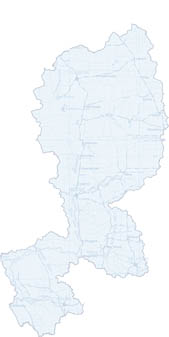
So far we have received ten expressions of interest from all over the catchment (see map), including overwhelming interest for the native remnant vegetation incentive. Figures show that we have already allocated over three quarters of the Moore River fencing and re-vegetation money available. The native remnant fencing incentive is nearly at its limit but an extension from the state has released a few extra dollars due to the popularity.
Rachel Walmsley of MCC says ‘The flexible criteria and generous incentive has encouraged many farmers to sign up and protect their patch of the Moore River or native remnant bush. One of the remnants being protected is classed as a Priority 1 and features outstanding native bush with many rare and endangered species.’
If you’re interested in any of the incentives on offer then get in quick before all the money is gone. MCC can offer landholders $3,000/km for fencing and $500/ha for re-vegetating creek lines, and $4,000/km for fencing off priority remnant vegetation. Projects need to be completed by September 2011. Give Rachel or Ingrid a ring at the office for more details 9653 1355.
Value your Natural Assets Poster
Farmers involved poster
Down load here to get pdf version of "Bird Communities in Remnant and Planted Native Vegetation, southern Moore River Catchment"
produced by "InSight Ecology"
December 2011 |
| |
Caring for Our Country
Productive Saltbush Pastures to Combat Wind Erosion in the Eastern Moore $96,500.00
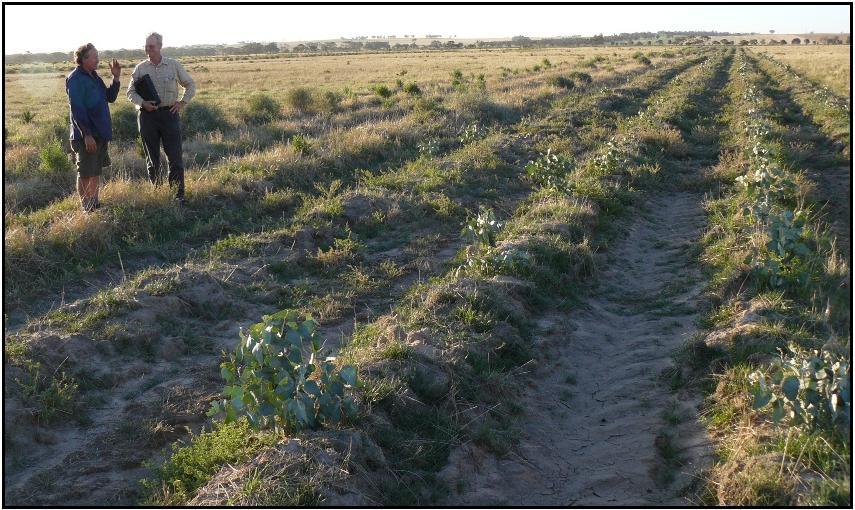
The MCC project ‘Productive Saltbush Pastures to Combat Wind Erosion in the Eastern River Catchment’ commenced in August 2009 with all 144,000 saltbush seedlings being allocated to 20 Moore Catchment farmers. The Caring For Our Country funded project delivered in conjunction with the Moora-Miling Pasture Improvement Group, aims to turn unproductive saline affected and wind erosion prone land, into productive pasture which can then be utilised in the autumn feed gap, as well as reducing wind and water erosion of the soils and enhancing biodiversity in the eastern Moore river catchment.
This project follows on from the highly successful NLP funded project ‘Creating Productive Saltbush Pastures on Saline Land’ in 2007/08 which saw 131,000 saltbush seedlings being planted on 13 sites in the eastern Moore catchment. The site preparation and planting techniques used alongside the knowledge and practical skills of all those involved ensured the project to succeed even through a tough planting season.
Return to top of page
Project Report & Map
Saltbush Booklet |
| |
Caring for Our Country
Increased Adoption of Sustainable Brushwood Production Project Funding C4OC $224,000.00
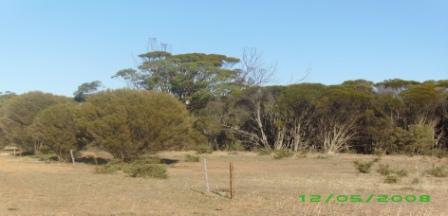 The project 'Increased Adoption of Sustainable Brushwood Production' has planted 500,000 native Melaleuca's for the production of brushwood on farms in the Moore River Catchment and the Yarra Yarra Lakes Catchment. Specific Melaleuca species are harvested and used in the construction of brushwood fencing, these species have the ability to coppice (resprout from a lignotuber) after harvesting, ensuring a renewable and sustainable resource. Two endemic species to the region are sought after for brushwood and have proven to be suitable for growing on land that is no longer viable for cropping systems due to increased input costs and the spread of salinity. The project 'Increased Adoption of Sustainable Brushwood Production' has planted 500,000 native Melaleuca's for the production of brushwood on farms in the Moore River Catchment and the Yarra Yarra Lakes Catchment. Specific Melaleuca species are harvested and used in the construction of brushwood fencing, these species have the ability to coppice (resprout from a lignotuber) after harvesting, ensuring a renewable and sustainable resource. Two endemic species to the region are sought after for brushwood and have proven to be suitable for growing on land that is no longer viable for cropping systems due to increased input costs and the spread of salinity.
For Futher information please contact Moore Catchment Council Office email or phone 08 9653 1533 go to for full report
Return to top of page |
| |
Project 063045
Creating Productive Saltbush Pastures on Saline Land NLP Funding $100,592.00
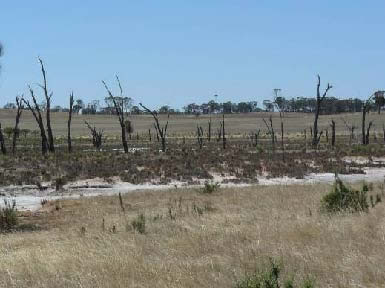 Creating Productive Saltbush Pastures on Saline Land aims to improve the profitability and agricultural
sustainability of the Moora-Miling Pasture Improvement Group (MMPIG) region by approximately 15 farmers Creating Productive Saltbush Pastures on Saline Land aims to improve the profitability and agricultural
sustainability of the Moora-Miling Pasture Improvement Group (MMPIG) region by approximately 15 farmers
proactively tackling approximately 10 ha saline land on their properties by changing their farm and land
management systems by planting saltbush and rhagodia. Booklet produced by Rachel Walmsley Saltbush Booklet in .pdf
For futher information please contact Rachel Walmsley email Phone 08 9653 1355 or 0488 954 664
Return to top of Page |
|
Project 05N115-03
Control of rising groundwater and salinity in the Koojan - Gillingarra Region Funding NAP $195,000.00
 This project has focus on activities to mitigate rising groundwater and the development of secondary salinity in
the Koojan-Gillingarra region. A hydrogeological study of the project area was completed in 1999 and identified
areas where the largely confined Leederville aquifer was interacting with surface water flows and shallow
perched aquifers. This project will involve producing a catchment plan based on this study, other existing data
and ground surveys. Financial assistance will be provided to landholders to implement on-ground works
identified in the catchment plan, including fencing of remnant vegetation and waterways, earthworks and the
establishment of native and commercial perennial vegetation in areas where they will have most impact on
controlling rising groundwater. In addition, the project will trial soil amelioration processes to increase moisture
retention of soils in the upper catchment and promote adoption of sustainable farming practices. This project has focus on activities to mitigate rising groundwater and the development of secondary salinity in
the Koojan-Gillingarra region. A hydrogeological study of the project area was completed in 1999 and identified
areas where the largely confined Leederville aquifer was interacting with surface water flows and shallow
perched aquifers. This project will involve producing a catchment plan based on this study, other existing data
and ground surveys. Financial assistance will be provided to landholders to implement on-ground works
identified in the catchment plan, including fencing of remnant vegetation and waterways, earthworks and the
establishment of native and commercial perennial vegetation in areas where they will have most impact on
controlling rising groundwater. In addition, the project will trial soil amelioration processes to increase moisture
retention of soils in the upper catchment and promote adoption of sustainable farming practices.
For Further information please contact Ingrid Krockenberger email Phone 08 9653 1355 or 0409 296 264
Download Final report in .pdf format
Download Summary Perth Basin in .pdf format
Download Final Report V Reed in .pdf format
Return to top of page |
|
Project 05N115-01
Revegetation of Natural Drainage Lines and Protection of Remnant Vegetation
in the East Moore Catchment. NAP $411,000.00
.jpg) The East Moore Catchment is a sub-catchment of the Moore River Catchment, covering 160,000
hectares. The area boasts a unique and diverse range of plant species, yet less than 25% of the
original native vegetation is retained. Salinity is a key factor threatening remnant vegetation and
productivity of land. Much of the salt-affected land lies along natural drainage lines and these areas
can be made productive with salt-tolerant species, and also act as wildlife corridors linking remnant
vegetation. Farmers in the East Moore Catchment have had an active involvement landcare and the
adoption of sustainable farming practices for many years. The East Moore Catchment is a sub-catchment of the Moore River Catchment, covering 160,000
hectares. The area boasts a unique and diverse range of plant species, yet less than 25% of the
original native vegetation is retained. Salinity is a key factor threatening remnant vegetation and
productivity of land. Much of the salt-affected land lies along natural drainage lines and these areas
can be made productive with salt-tolerant species, and also act as wildlife corridors linking remnant
vegetation. Farmers in the East Moore Catchment have had an active involvement landcare and the
adoption of sustainable farming practices for many years.
The aim of the project is to implement strategic, integrated conservation works that build on
Local Action Plans, by prioritising remnants and natural drainage areas. A funding incentive
will be provided for these areas to be fenced off, and for drainage areas to be revegetated
with local, native species and saltland species to form linkages. Field Days will be held at
local sites, while flora & fauna surveys will be conducted in remnants to assess biodiversity
value and enable vouchering of species in the WA Herbarium. Landholders receiving
funding will be required to sign some form voluntary management agreement such as
CALM’s ‘Land for Wildlife’.
For further information contact Moore Catchment Office email Phone 08 9653 1355
Report on Bird Survey around New Norcia and Calingari conducted by InSight Ecology
Return to top of page |
|
|
|
Moore Catchment Council -
1 Padbury Street,
Moora, Western Australia WA 6510
Phone (08) 96531355
© 2012 Moore Catchment Council
   |